


CTN Annual Report 2026: young travellers fuel expedition growth
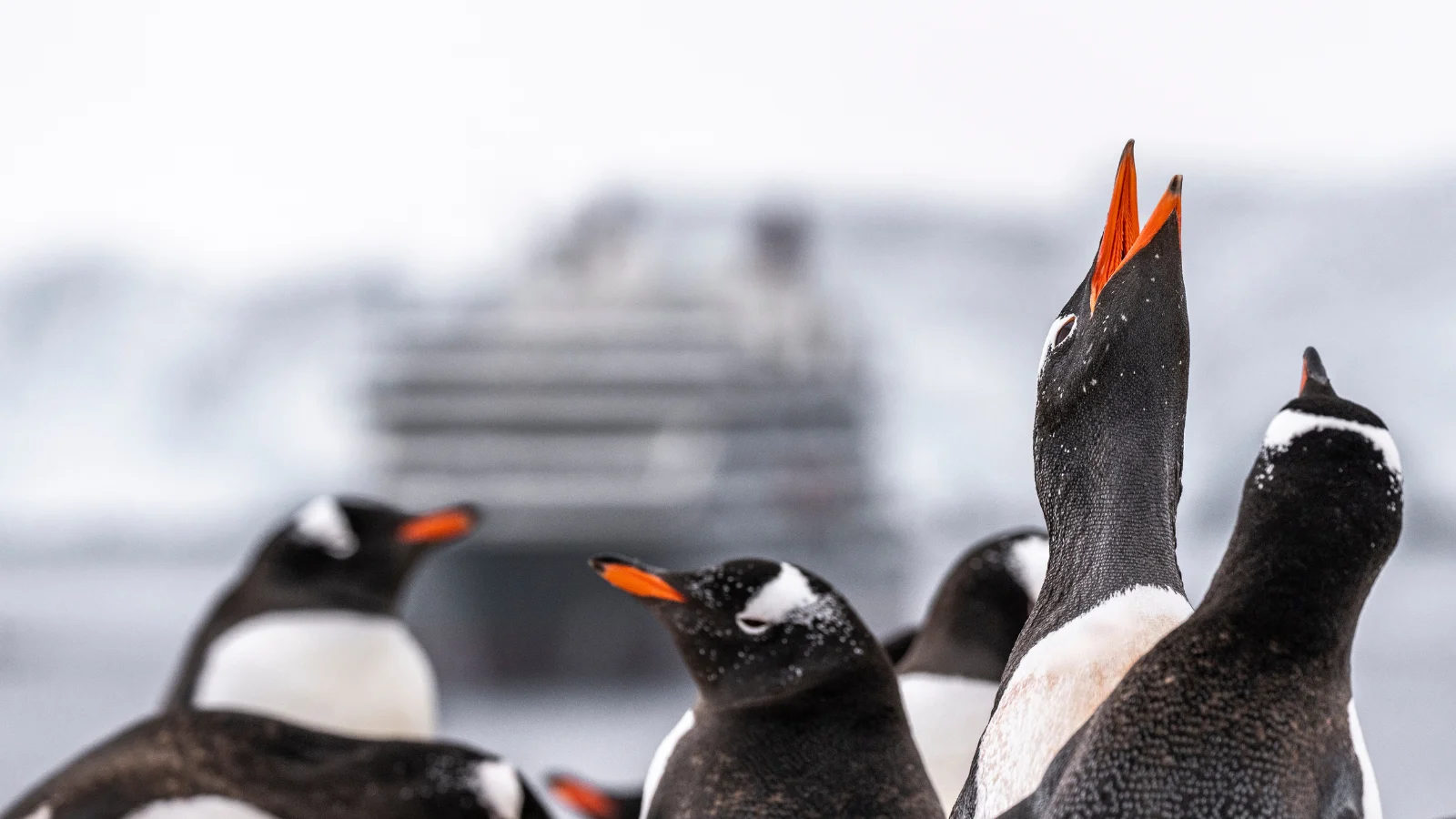
Interest in expedition cruising is spiking amongst younger travellers, but are concerns around sustainability putting them off from taking the plunge?
The rising popularity of expedition cruising is now established as a known trend in the industry, and the findings of our survey shed light on why.
A desire for unique experiences and the possibility of exploring otherwise inaccessible remote destinations are helping to establish this as one of the cruise industry’s fastest growing sectors.
Industry trade bodies are alive to this trend, with the Expedition Cruise Network (ECN) reporting growth this year among all 30 of its operator members and nearly two thirds of its travel trade members.
Indeed, the key challenge the ECN identified in its annual report was that demand is rising faster than supply, particularly in regions where local regulations cap capacity. Akvile Marozaite, CEO, ECN says: “With economic uncertainty, increased scrutiny in sustainability, diversity of product and destinations, travel trade professionals need clarity in product differentiation, in-depth training and more support than ever before if they are to provide inspiration and reassurance to a broader range of curious travellers.
“With a significant proportion of new customers in the sector, the opportunity for growth is clear but it will only be realised if the industry works together.”
So, what did we discover in our research about what consumer attitudes are driving this vibrant sub-sector? Crucially, when asked to rate how a range of statements apply to expedition cruising, the response from respondents is clear.
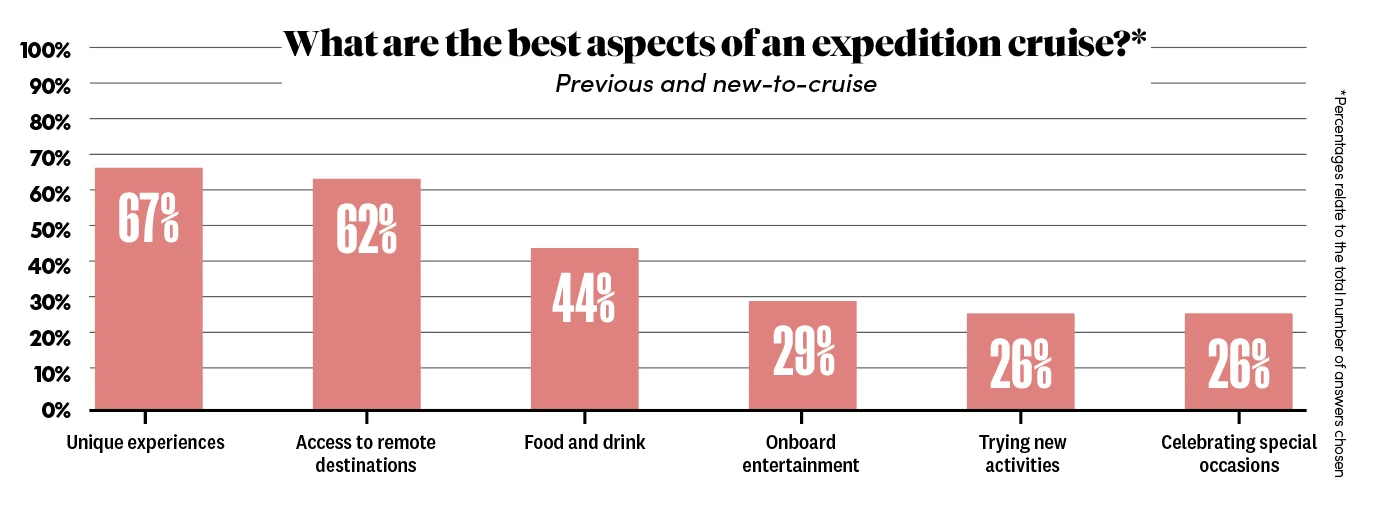 Two stand out as most popular. Firstly: “An expedition cruise is seen as offering a unique experience different from other holidays” – 67 per cent agree with this, rising to 71 per cent for those new-to-cruise.
Secondly: “An expedition cruise is seen as offering access to remote or less accessible destinations, like Alaska, Antarctica” – 62 per cent agree with this, rising to 68 per cent for new-to-cruise.
This indicates that expedition cruises have an appeal beyond the traditional cruise segment, so for travel sellers looking to grow their business, expedition could be a good way to appeal to new clients.
The desire for a unique experience is consistent across the age ranges, with 18-34-year‑olds more likely to agree than those in the 35‑54 age bracket. In a separate question we found that 79 per cent of under-45s agree that an expedition cruise is “for people like me” compared to just 57 per cent of those aged 45 and above.
This desire among younger generations who have grown up in the internet age and who value experiences over possessions has long been credited for the resilience of the travel sector. And we are clearly seeing it here, with 88 per cent of under-45s saying this type of holiday appeals to them and 82 cent saying expedition cruises go to places they’d like to visit.
This points to a positive future for expedition cruising, but an area of concern highlighted by the ECN was a need for clearer standards related to sustainability. Cruise lines in this sector operate in some of the most fragile ecosystems on the planet and there are ever-increasing expectations that they do so according to strict protocols.
The ECN notes in its report that operators are investing in greener ships, science partnerships and new technologies, but concedes “transparency remains inconsistent”.
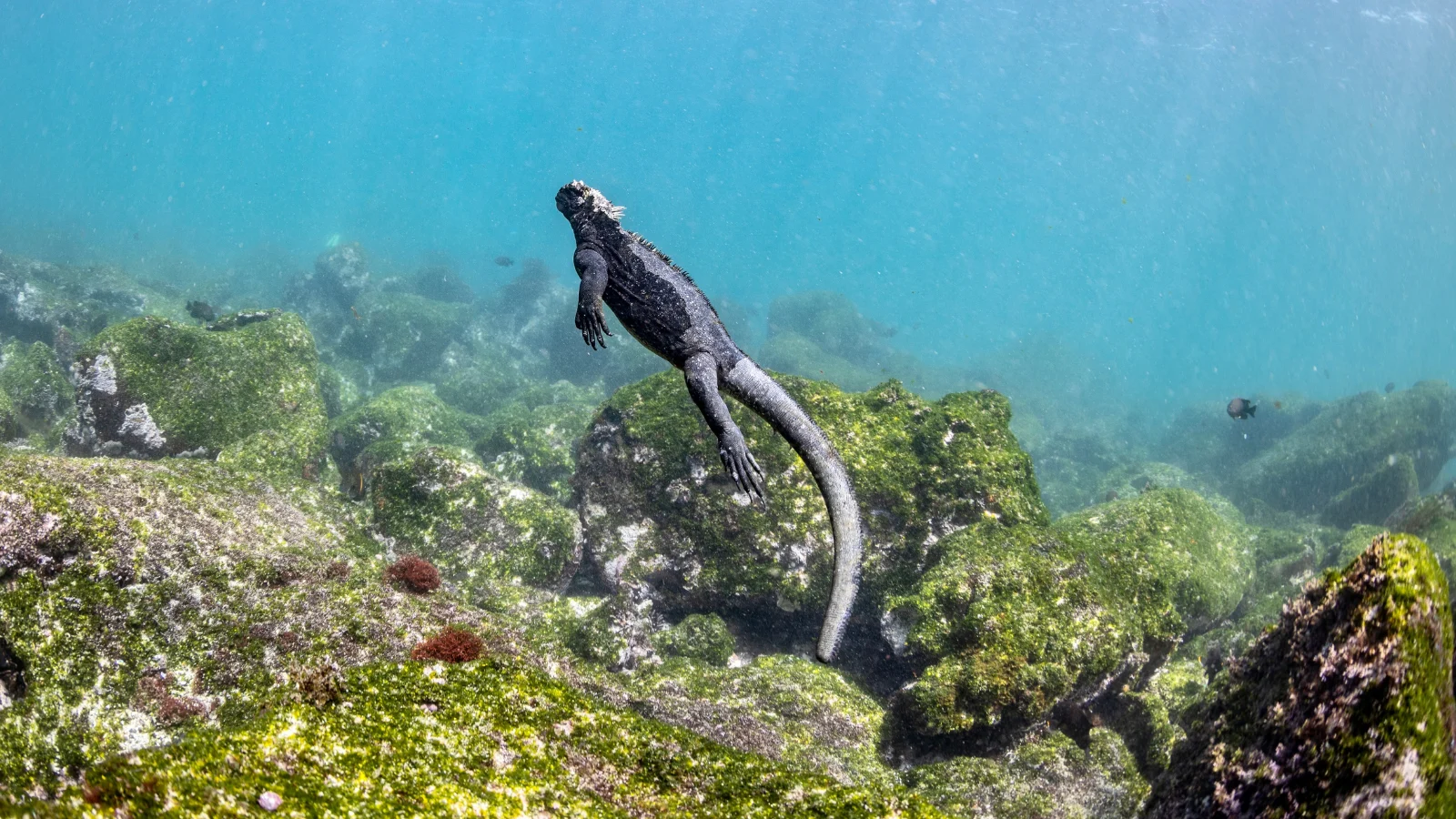
Despite sustainability concerns, 64 per cent of respondents still value expedition cruise’s ability to transport them to bucket-list destinations, saying it’s “great for enjoying scenery, wildlife and nature.”
When asked what style of cruising they would most like to experience on their next trip, traditional and luxury cruises came out on top, with expedition in fifth place behind river and extended around-the-world-cruises. This suggests that despite the obvious allure of this type of holiday, many travellers in the UK still perceive it as unattainable.
Of those who are thinking about taking an expedition cruise, experienced cruisers out score new‑to‑cruise. This disparity between the respondents with and without cruise experience is more marked when asked what style of cruise they would book if money was no object. While 21 per cent of past cruisers answered expedition, just 16 per cent of new-to-cruise respondents agreed, the same ratio as men to women.
Unsurprisingly, the largest number of respondents to this question say they’d book a luxury cruise when not restricted by budget. Only river cruise was less popular than expedition. When considering an expedition, the once-in-a‑lifetime experience matters more than the issue of cost.
What, therefore, did our respondents reveal about the price they’d be willing to pay for an expedition cruise?
We asked what price point they would consider a seven-day Antarctic cruise to be too cheap and therefore assumed to be low quality; what would be considered great value for money; and what price would be deemed expensive, but not out of the question.
The sweet spot comes in at around the £2,400 mark, with men more likely to consider a slightly higher price reasonable (£2,640) than women (£2,116). Pricing under £2,000 puts people off due to concerns about quality, while experienced cruisers tell us that they are willing to pay £4,053 before considering it to be too expensive, in comparison to new‑to‑cruise (£3,295).