Global conflict, AI and demand shifts: six key takeaways from CLIA Conference 2026
The impact of the war in the Middle East, the ongoing cost of living crisis and the importance of utilising new technology took centre stage at this year’s CLIA Conference
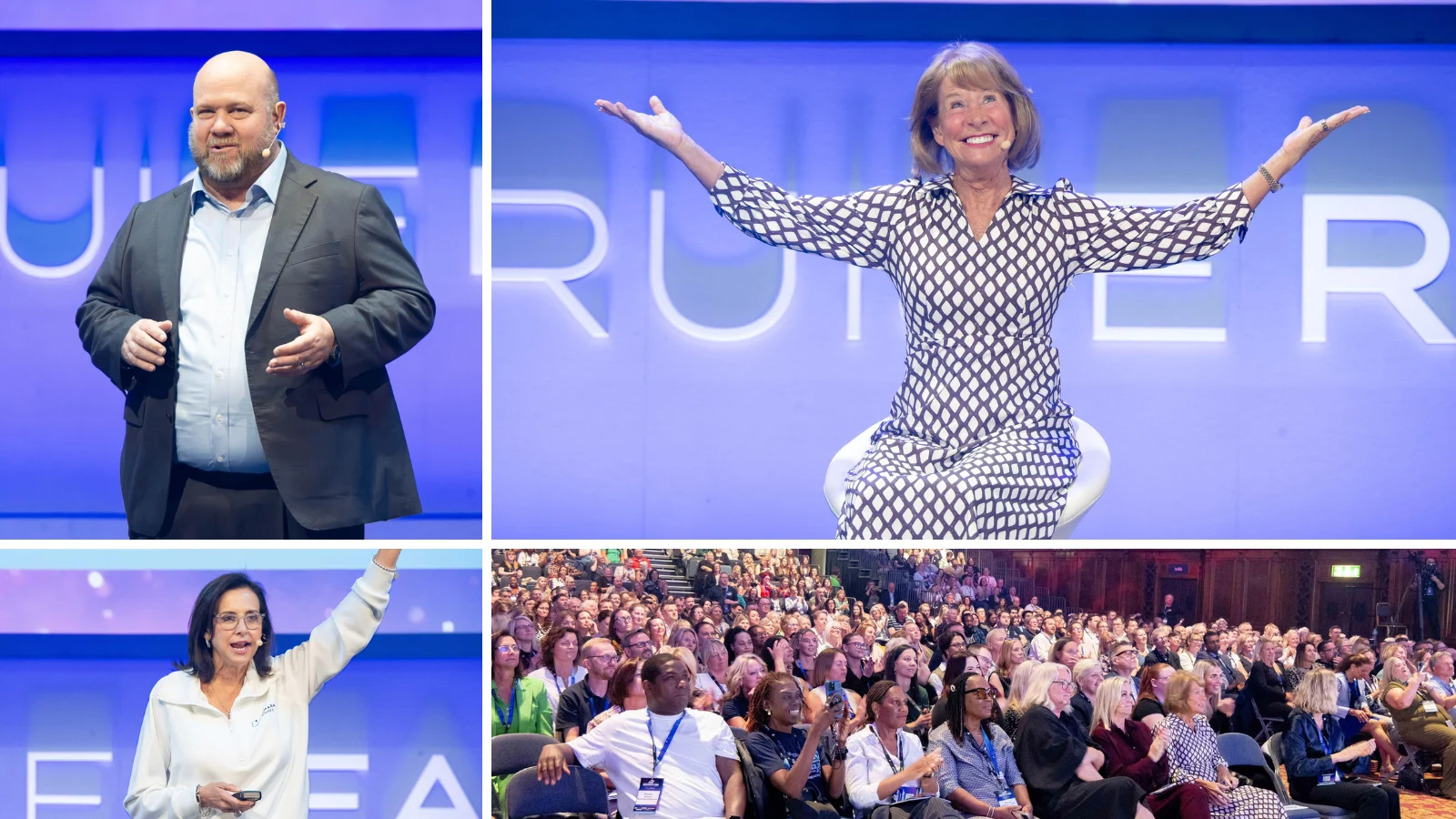
Travel agents, cruise line executives and destination representatives travelled to Southampton from 4-6 June for the event, which was focused on making the travel trade “cruise ready”.
The three-day conference included several business sessions, a trade fair, and ship visits on P&O Cruises’ Britannia, Cunard’s Queen Anne, Celebrity Cruises’ Celebrity Apex; MSC Cruises’ MSC Virtuosa; Regent Seven Seas Cruises’ Seven Seas Grandeur; and Oceania Cruises’ Oceania Insignia.
CLIA UK managing director Andy Harmer OBE kicked off proceedings in Southampton’s Guildhall on Thursday (4 June) by sharing insights collected by the organisation prior to the event. Nearly 60 per cent of delegates were new to the conference, and 9 per cent were yet to sell a cruise.
“It’s fantastic to see such strong attendance at this year’s conference and a record number of participants taking part in our charity cycle ride,” Harmer said.
“The cruise community is built on collaboration, and events such as these demonstrate both the strength of the industry and the willingness of colleagues to come together, support one another and give something back.”
A key focus of the sessions was the industry’s turbulent start to 2026 due to the conflict in the Middle East, the Hantavirus outbreak and the ongoing cost of living crisis spurred by geopolitical uncertainty.
Below, we’ve outlined six key takeaways from the event to help travel agents and industry executives deal with these ongoing challenges, while boosting sales and engagement throughout the summer and into 2027.
‘We need effective government policy to grow’
President and CEO of CLIA, Bud Darr, highlighted the operational challenges the sector has faced this year, including overtourism and sustainability.
“We have to listen to communities and take their concerns seriously. Some feel like we are disproportionately contributing to what they feel is too many people. I view that as a country overselling a destination with insufficient infrastructure, and once they improve these issues, we will be there to support them.”
Darr’s comments come following reports that officials in Santorini Municipal’s Support Fund approved a new rule that will change how cruise guests arrive ashore. Under the policy, up to 70 per cent of passengers from each ship must disembark at Ormos Firon, also known as Fira Bay, while no more than 30 per cent may arrive through Athinios Port.
“Sometimes [officials] are driven by political dynamics, and they’re not looking to solve the problem. We need to have effective policy match up with good business, and this decision contributes to the problem at hand, forcing people into the wrong location rather than an area that is easier to disperse guests.”
A year of disruption – or opportunity?
Delegates also heard from a panel featuring Princess Cruises vice president UK, Ireland and EMEA Eithne Williamson; Virgin Voyages board member John Lovell; Holland America Line and Seabourn senior vice president Rob Coleman; Royal Caribbean vice president and managing director EMEA Gerard Nolan; and Celestyal chief commercial officer Lee Haslett.
Nolan admitted that despite starting the year in a strong position, the line has faced challenges in the last few months. “Guests still want to travel. People are ring fencing their savings for travel and we’re leaning into that,” he said.
“From a product level, we’re naturally seeing more people gravitate towards Europe, with the launch of Legend of the Seas helping to drive demand there. People have second guessed travel to the US, but we’re seeing that bounce back – not without its challenges.”
Williamson, meanwhile, believed the drop in US tourists to Europe following the conflict in the Middle East has created more opportunity for British travellers. “[The conflict] has impacted a few markets – the Asia and Australasia markets, for example.
“It’s key to drive the importance of international sourcing. We’re a market that people believe in, but when there is disruption, we can move our product to safer seas.”
However, Celestyal – which had both of its ships stuck in the Middle East during the conflict – was forced to replan its 2026 season due to delays. Haslett said: “Our vessels are now safely back in Piraeus and we are now planning based on demand analysis to go a little deeper into the season in the east Med and the west Med.”
Late booking window open
Haslett said the rocky start to the 2026 has impacted demand from other source markets, creating more opportunity for UK sailors. “We are seeing softness in demand from Australia and New Zealand, which has opened up opportunities for Brits around late bookings for the summer,” he continued.
“We have seen a double digit decline in Americans travelling to the eastern Med this season, which means there will be later inventory available for the European market.”
Lovell, meanwhile, said Virgin Voyages is in a “very unique” position. “Being adult-only, we’re really not seeing the pressure I think some of our colleagues are seeing. We’re pretty well insulated from that. Our growth is continuing, but it’s not a zero sum game.”
Coleman outlined that despite seeing a slowdown of bookings coming out of wave, interest soon bounced back. “People don’t react in the same way as they might have done previously. People paused, but then we saw things continue forward and that momentum from the start of the year picked up again.”
In another session, president of Cunard, Katie McAlister, praised the line’s well-booked forward postion for helping it to maintain positive momentum through the previous few months. “The world is a bit uncertain, and what you find in times of uncertainty is that customers lean into what they trust, like certain brands and travel agents,” she said.
“You have to work really hard to peak the attention of customers in times of uncertainty. We’ve had the Olivier Awards and our summer 2028 launch, which has really helped us.”
‘Business fell of a cliff, but cruise stayed strong’
In a first at the CLIA Conference, a panel of travel agent leaders took to the stage to share insight from the frontline. Dame Irene Hays, owner of Hays Travel, Nicki Tempest Mitchell, managing director of Barrhead Travel, and managing director of World Travel Holdings Lisa McAuley, outlined the trends their respective companies are tracking.
Dame Irene said cruise has been “consistently well supported” compared to other markets. “Obviously after the situation in the Middle East the business around Europe fell off the edge of a cliff, as well as Dubai and Doha. We then saw the Med pick up significantly, but there was some negative sentiment around the US.”
McAuley, meanwhile, highlighted the importance of leading with the destination and experience of a cruise, rather than price, when speaking with customers. “The challenge will be when the prices go up again,” she said.
“If you talk about price initially, it becomes a transactional relationship. It’s all about story telling, if you can intertwine your own personal experiences within that, you’ll certainly secure a sale.”
Tempest Mitchell, meanwhile, explained the importance of the growing family market to the Scottish agency’s burgeoning cruise portfolio. “New to cruise is going incredibly well for us, and families are also outperforming other sectors. It comes back to having the right knowledge about a cruise ship and making sure we match the right brand to the right customer.”
‘AI won’t take your job – but someone using it will’
CEO of Azamara Cruises, Dondra Ritzenthaler, returned to the conference following her rousing lion’s mentality speech at CLIA Conference 2024 to draw synergies between olympic athletes and members of the travel sector.
“Olympic athletes must prepare and practice. Then they have to be resilient, overcome adversity, and they have to know their competition and the relationships they build. This is exactly the same for everyone in this room,” she said.
“We work hard in this industry, but these athletes have to know every single detail. Every detail matters, so make sure you build a support system, expect the unexpected and learn from the best.”
She continued: “I’m so sick of hearing AI is going to take your job. AI isn’t taking your job, but somebody using AI will take your job if you’re not embracing it.”
Power of partnerships
Vice president of international sales for MSC Cruises and Explora Journeys, Antonio Paradiso, took to the stage with former England and Chelsea goalkeeper Carly Telford to discuss the importance of brand partnerships for the cruise line.
“The engagement has gone through the roof thanks to our partnership with Chelsea. There’s more engagement with the public, which has been phenomenal, Chelsea Football Club women have done a fantastic job,” Paradiso said.
“We’ve made some incredible memories with different organisations, but more importantly it’s about getting the message out there in a fun way. That constant exposure further increases that spontaneous awareness. It will drive more and more people to get involved with cruising. It’s not just about talking about cruises, but tapping into the wider holiday market. I’ve seen the figures increase over the years, we’ve come from very tiny percentages to some rather larger numbers.”
Paradiso further explained how MSC Cruises will not impose a fuel surcharge to its summer sailings to bolster consumer confidence. “There are some people who aren’t ready to commit to a holiday, so we’re trying to support them,” he said. “We’re trying to be more flexible with deposits, trying to be as clear as we can be in terms of pricing, and we won’t be implementing a fuel surcharge.”