

Are cruise lines’ sustainability credentials cutting through?
The cruise industry has long championed its sustainability credentials, but are they cutting through? As agents report little to no customer demand for greener sailings, we investigate what must change to secure the future of the sector – and the planet
The word ‘sustainability’ has been engrained in the travel industry’s narrative for decades, and for good reason. According to climate tech company Greenly, travel and tourism accounts for around 8 to 10 per cent of global greenhouse gas emissions, placing the sector firmly in the spotlight as pressure mounts for meaningful change.
There are, however, signs of progress. The World Meteorological Organization (WMO) suggests the ozone layer could return to 1980 levels by around 2040 across much of the world, highlighting the impact coordinated global action can have.
For cruise in particular, significant investment in cleaner technologies, alternative fuels and more efficient ship design signals an industry taking its environmental responsibilities seriously.
Yet a key question remains: are these efforts resonating with consumers? According to Cruise Trade News’ 2026 Annual Report, while 22 per cent of respondents describe themselves as “responsible travellers”, just 9 per cent say environmental concerns would stop them from booking a cruise.
“To be honest, we are never asked about sustainability when people book with us,” admits Oasis Travel executive director Sandra Corkin. “The cruise companies are very good at giving us their sustainability policies, but we have had no experience of these sorts of things influencing decisions.”
So, if sustainability isn’t influencing sales, should agents and operators rethink how they communicate it with customers?
People expect the cruise lines and governing authorities to be responsible for ensuring sustainability
Travel Counsellor Sarah Bolton believes the majority of consumers say sustainability is important to them – which might be the case – but they do not proactively seek out sustainable options when booking a holiday, and would rather assume their trip meets environmental protocols as standard.
“When it comes to booking cruises, I have never ever had anyone ask about sustainability,” Bolton continues. “Maybe if someone is that bothered about it, they’ve already done their own research, or a lot of people still automatically assume that cruising is not sustainable and therefore don’t even think about doing a cruise if that’s an issue to them. I think there may be an attitude of ‘not my problem’ and people expect the cruise lines and governing authorities to be responsible for ensuring sustainability.”
Founder of The Cruise Room, Robbie O’Grady, agrees that while sustainability matters – it is yet to impact booking decisions.
“The reality is that customers are not taking [sustainability] into consideration. It’s rarely – if ever – a requirement for guests to step onboard. Destinations, experience onboard the ship, room types, drinks packages and bundles are always the requirements, and these are still the priority,” he adds.
Despite being confident in communicating cruise lines’ sustainability efforts when needed, O’Grady feels some operators could be doing more to support.
“You always need your knowledge to be refreshed and topped up. To be fair, except for expedition cruise lines, we don’t feel as if the cruise lines themselves are talking about it as much as they once were.”
O’Grady believes there are more pertinent issues dominating guests’ booking decisions, including overtourism and geopolitical concerns in the Middle East and parts of Northern Europe around Ukraine.
“These issues along with ship size, destination, room type and add on packages form the conversation with 99.9 per cent of guests today,” he adds. “It feels like sustainability may have slipped further down the list and some momentum to highlight the credentials may have been lost.”
However, O’Grady has seen a shift in the conversation amongst younger cruises, with “one or two” young couples finding cruise lines’ sustainability credentials more important.
Kirsty Van Wyk, owner of KVW Luxury Travel, has seen a similar trend emerging. “One of my clients, who’s younger, is really concerned with sustainability when travelling,” Van Wyk says. “She had no intention of taking a cruise, but she took a Celebrity Cruises sailing recently which surprised me.”
This is why, Van Wyk believes, cruise lines should continue to champion their sustainability credentials as it is beginning to resonate with the next generation. “For the older demographic of cruise passenger, [sustainability] just won’t cut through,” she adds.
“There are a minor few that care, but the younger generation coming in talk about it a lot more so cruise lines should target them when speaking about their sustainability credentials. The thing is, we’re all trying to make a livelihood and needs must, but the consumer dictates where they want to go.
“I offer sustainable options to my clients, but not everyone is interested. Companies like Antara and Havila Cruises are far, far ahead of others so promoting these lines is really important. We should definitely encourage lines to keep championing it, even if the current research suggests it isn’t impacting consumer decisions, as I do think it will start to filter through and become more important.”
Guests don’t want responsible travel to feel like a trade-off; they want it to enhance their journey
One cruise line that prides itself on its commitment to the destination it serves is 132-year-old Norwegian coastal cruising specialist, Hurtigruten.
According to vice president of sales and marketing for the UK and emerging markets, Hayley Moore, the line has seen its sustainability credentials play an increasingly important role in booking decisions in recent years. “What we’re seeing is a clear shift in expectations, with guests looking for genuine accountability from the brands they choose,” she tells Cruise Trade News.
The brand carried out some research on UK traveller sentiment in early 2025 which highlighted that 57 per cent of respondents believe large companies should take more direct environmental action, while 51 per cent said it’s important that they take action themselves.
Thirty-four per cent, meanwhile, said they are actively committed to ensuring their travel plans do not negatively impact nature or climate, and 39 per cent try to reduce their carbon footprint in daily life.
“At Hurtigruten, we believe that the greatest impact comes when sustainability is embedded within the overall experience,” Moore adds.
“Guests don’t want responsible travel to feel like a trade-off; they want it to enhance their journey. When we clearly demonstrate how our voyages deliver both meaningful local impact and immersive experiences, sustainability becomes part of the value proposition rather than a separate consideration.”
This shift has been highlighted in the line’s guest feedback surveys. Post-voyage questionnaires show sustainability and responsible tourism are playing an increasing role in booking decisions.
“For trade partners, we integrate our sustainability messaging across training materials, live presentations and online modules, ensuring agents clearly understand what sustainability means for Hurtigruten and how it enhances the guest offering. This is further brought to life through regular fam trips where agents get firsthand experience of our voyages,” Moore explains.
Dominic Simpson, sustainability manager at Fred. Olsen Cruise Lines, says that while a new AI-powered food waste monitoring trial onboard its flagship Bolette was inspired by the company’s own ambitions, the line is seeing more guests than ever asking questions about its sustainability protocols.
We do regular surveys with customers to ask them what is important, and sustainability is creeping up the list
“We’re always looking for practical ways – both big and small – to help reduce our environmental impact, and this trial is a great example of how innovative technology can support us in continuing to implement more sustainable practices.
“It’s important for us to highlight initiatives like these, as they demonstrate that meaningful change often comes from smaller, everyday improvements,” he adds. “By embracing new solutions and being transparent about our progress, we can not only enhance our own operations but also help set a positive example for the wider industry.”
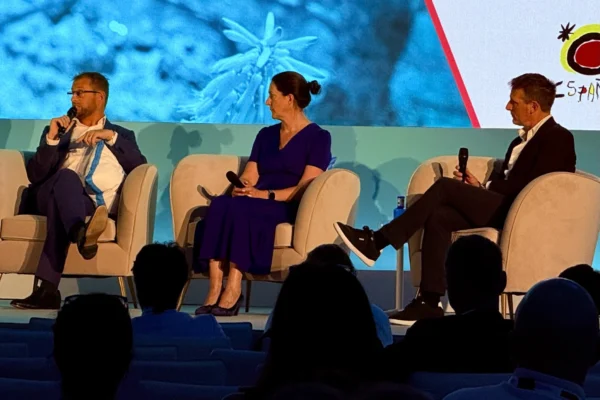
However, speaking during a panel discussion on the future of cruise at New Deal Europe 2026, Robin Griffiths, national partnership manager for APT Travel Group, says sustainability is not yet the biggest driver behind bookings being made in APT Luxury River Cruises or Travelmarvel.
“It’s a bonus, customers like to hear how much good their doing by booking their holiday with us, but I still think bookings are being made on value, design of ship and inclusions,” he continues. “Our job is to tell the story of how sustainability is going to help a customer and improve their holiday. Battery-powered, electric-powered ships are coming, and they will be good for the planet and people’s experiences.”
Despite not being a current decision driver, Griffiths believes sustainability will soon be one of, if not the most important consideration consumers will make when booking a holiday. “We do regular surveys with our customers to ask them what is important and sustainability is creeping up the list and we think it will be at the top in no time.”