

Discovering the wild beauty of the Hebrides on a Scottish Isles cruise
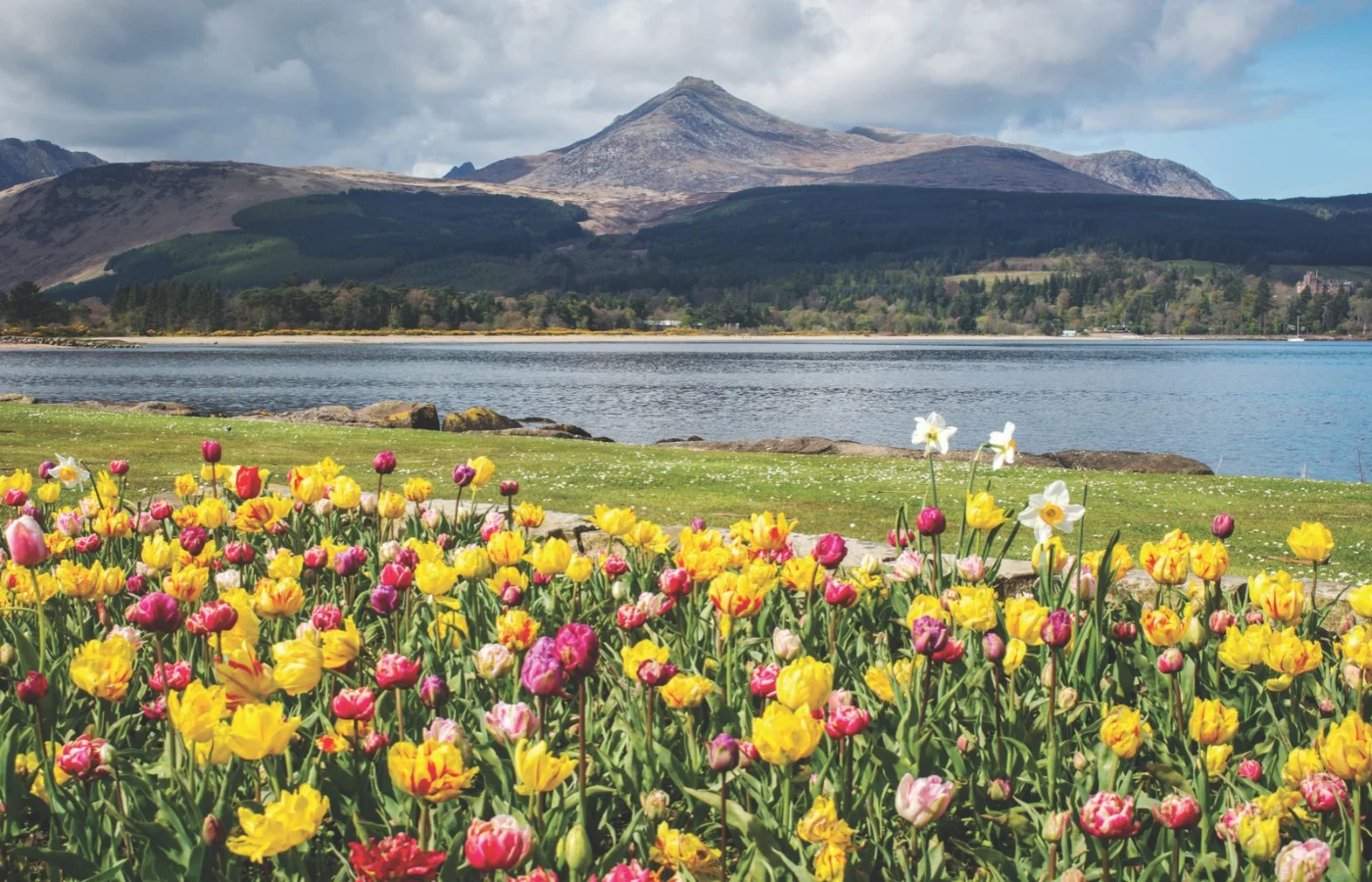
Surrounded by subtropical flowers one day and shrouded in fog on a remote archipelago the next, Raphael Giacardi delights in the diversity of the Scottish Isles
Soft rays of sunshine pierce the canopy of beech trees as the last of this morning’s rain evaporates. It’s a bright spring day and the sun is approaching its zenith: hot enough to make me remove my cap and wipe a few beads of sweat from my forehead.
The air is heavy with the scent of camellias, magnolias and rhododendrons, while the chirps of robins and other small birds float through the air. I’d been told before embarking on this 10-night Scottish isles and Hebrides sailing with HX Expeditions that the diversity of landscapes would fascinate me, but nothing could have prepared me for the tiny Isle of Gigha.
Had I been teleported here with no prior knowledge of my destination, guessing my whereabouts would have been quite impossible. The multicoloured floral displays feel subtropical, suggesting the exotic gardens of Madeira, but the tall trees framing the skyline seem more rooted in continental Europe.
A delightful 15-minute walk away, there’s a white‑sand beach with a few small boats bobbing in the tide. It could be the Mediterranean – until I dip my toes in the 11°C water. Warmed by the Gulf Stream, the most southerly of the Inner Hebrides has a microclimate of its own, milder and sunnier than you’d ever associate with Scotland.
Achamore Gardens – the place that’s dazzling me right now – was created in the 1940s by a newcomer to the island, Colonel Sir James Horlick, who set about harnessing the local conditions to create a place where exotic plants could thrive. More than 80 years later, the fruits of his labours still amaze.
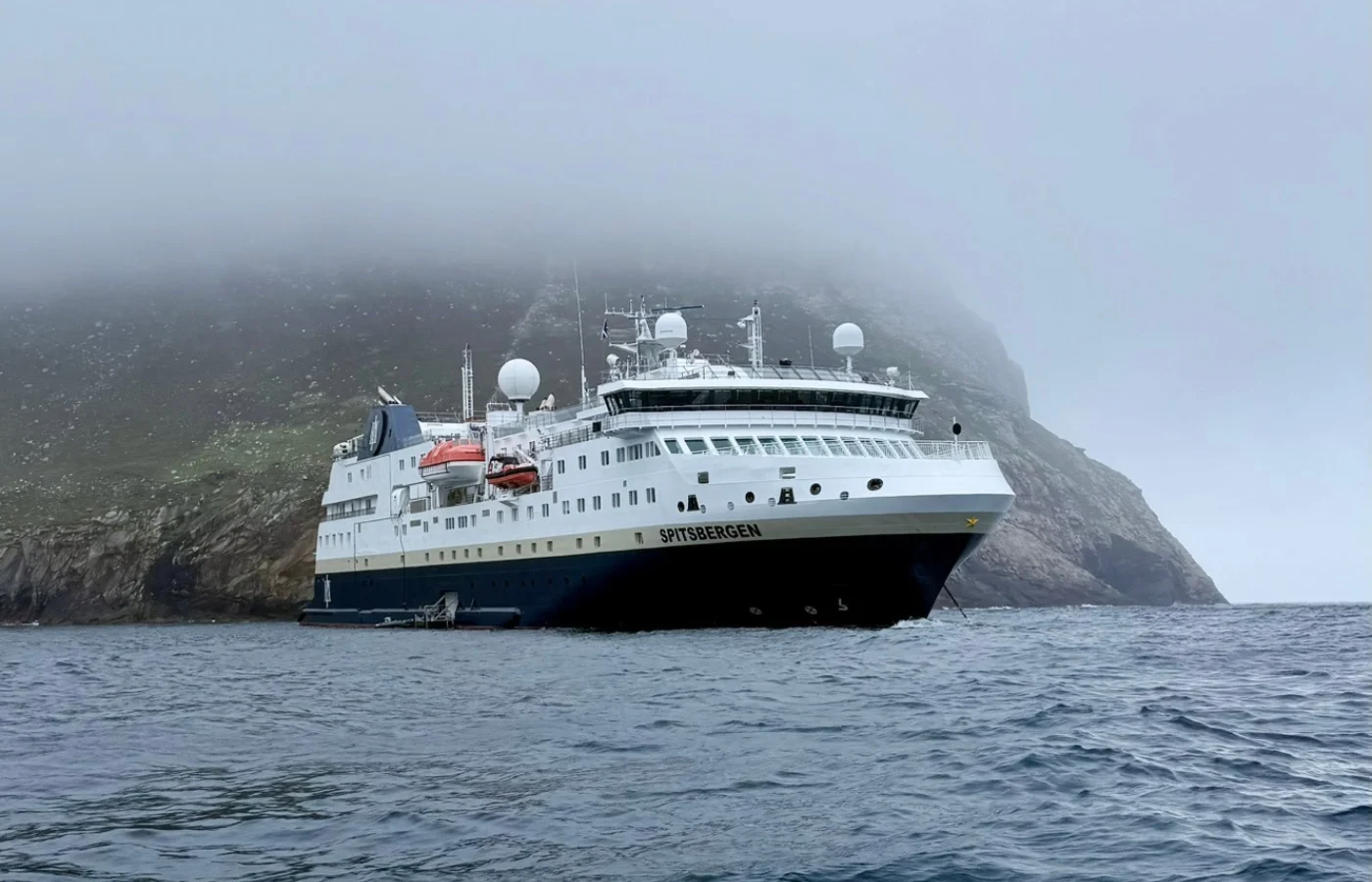
Two days later I’m standing on the deck of HX Expeditions’ MS Spitsbergen at 8am, warming my hands with a mug of black coffee as the drizzle slides down my rain jacket. Ahead of me, thick fog blankets the hills of Hirta, the largest island in the remote Scottish archipelago of St Kilda, some 40 miles from the nearest speck of land.
There is nothing Mediterranean about this dot in the Atlantic Ocean; it’s a wild, isolated, almost alien landscape of craggy cliffs, towering sea stacks and hills wrapped in maritime grassland.
Today the UK’s largest colonies of gannets and Atlantic puffins have Hirta more or less to themselves, but as I join my fellow guests on a mist-shrouded walking tour, our guide tells us that this barren spot was inhabited for 4,000 years. “
The local community lived almost exclusively off a diet of birds and their eggs,” she explains. In 1930, the last 36 residents gave up the struggle and abandoned their island home.
They left behind houses, 1,400 small drystone structures called cleits and a flock of Soay sheep – a primitive breed whose descendants still roam the archipelago today. Hirta is now deserted but for a few scientists and employees of the MoD, and the abandoned buildings give the place a ghostly feel.
What we aim to do is show this diversity of locations; places that are so close together but so different, not just in their wildlife, but also in the geology, the scenery and the people
Gigha and St Kilda are two different worlds in a journey that includes many more. And that’s exactly how HX Expeditions wanted this itinerary to feel.
As expedition leader Andrea Strand explains: “There is such a huge variety and beauty that comes to life on this cruise. What we aim to do is show this diversity of the Scottish Isles; places that are so close together but so different, not just in their wildlife, but also in the geology, the scenery and the people.”
Nowhere are these differences more apparent than on the Isle of Arran, which is divided almost perfectly in half by the Highland Boundary Fault. This is the line where the tectonic plates of the rugged Highlands meet the softer hills and valleys of Scotland’s Central Belt.
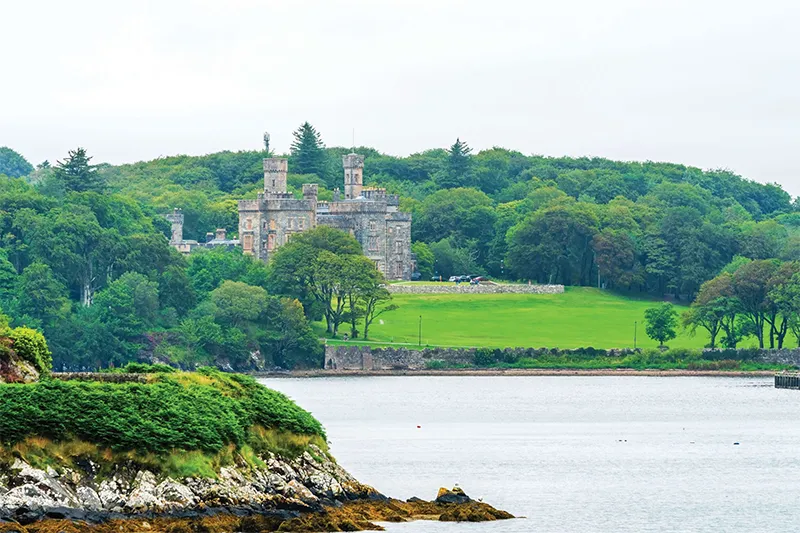
I start my day on Arran with a coastal hike to Brodick Castle, a former seat of the Dukes of Hamilton. Behind the castle, a line of imposing peaks – including the 874m Goat Fell – stands proud.
This is northern Arran: mountainous and craggy, a perfect picture of Highland scenery. A few hours later, I’m zipping along the country lanes of southern Arran on a forest safari with local company Mogabout. The jagged peaks have given way to gentler hills and rolling pastures: one island split in two by the slow, implacable movement of the Earth’s crust.
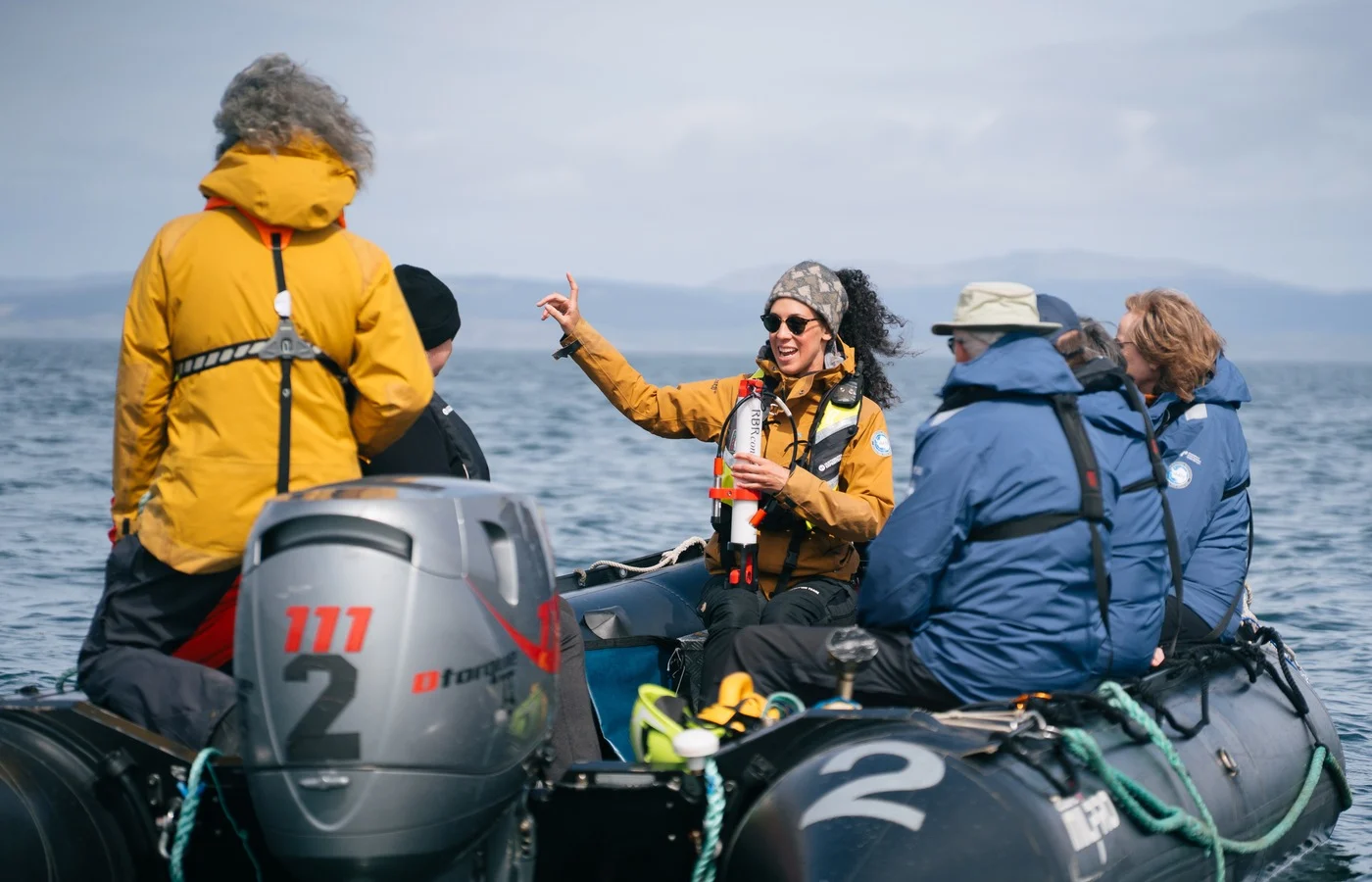
Geology is a recurrent feature on this trip. With the ship anchored off the Isle of Staffa, I board a Zodiac boat, one of the high-spec inflatable dinghies that tender guests to shore most days.
Today, however, we’re not aiming for land. Instead we’re cruising to the world famous Fingal’s Cave, an awe-inspiring sight that can only be fully grasped when you see it from the water. At first, your mind can’t make sense of what your eyes are telling it.
This gaping, cliff-side mouth faces the ocean, framed by mighty basalt columns whose perfect hexagonal symmetry must surely be man-made. But of course it isn’t. When lava cools slowly and evenly, it contracts as it solidifies, creating internal stresses.
To relieve these, the rock fractures, creating a perfect hexagonal grid. Gripping on to the rope running the length of the Zodiac, I can only marvel at this extraordinary accident of geology and physics.
This voyage takes a tiny speck of the British Isles and puts it under a microscope. In doing so, it reveals more of Scotland than most travellers will ever see
MS Spitsbergen takes me to a grand total of 11 islands on this voyage, yet none feels like a filler. Each adds something new, from history in Iona – the birthplace of Scottish Christianity – to world-class whisky in Islay. On Colonsay we discover some of the most beautiful and most deserted white-sand beaches I’ve ever seen.
The cruise calls almost exclusively at locations so tiny or remote that only small sailing vessels or motor boats can moor. My days follow the rhythm of our Zodiac trips, landing at jetties or piers, or cruising to sights that only such craft can reach. Wildlife is a constant backdrop. On Islay I spot a roe deer splashing about in shallow coastal waters. On the Isle of Mull, it’s seals resting on the rocky shores of Tobermory Bay.
On Arran I spot a buzzard and a hare in the forest. I snap a few shaky shots of puffins and wrens on St Kilda as dolphins and a minke whale also make an appearance. The hardest thing to comprehend on this trip is the scale.
Cruises can sometimes be guilty of ramming as many countries as possible into one trip. Here, most islands are only a few hours’ sailing from each other, maximising time ashore and giving each place the space to tell its story. This voyage takes a tiny speck of the British Isles and puts it under a microscope. In doing so, it reveals more of the Scottish Isles than most travellers will ever see.