

CTN Annual Report 2026: young travellers eye river, but price stalls growth

Younger travellers are identifying river cruising as a unique way to see the world, but perceptions around cost continue to dampen appetite, according to Cruise Trade News’ 2026 Annual Report
River cruising has long been considered a holiday option reserved for those with broods of grandchildren and nest eggs waiting to be spent. Yet according to our survey, more and more young people are considering a trip along one of the world’s waterways as a means to visit new places, try new food and switch off.
Most 18-34-year-olds (84 per cent) say a river cruise appeals to them, with 80 per cent claiming itineraries sail to the destinations they wish to visit. While 65 per cent of those aged 55–64 are interested in a river cruise, a sizeable 27 per cent say they wouldn’t enjoy this type of holiday – the second highest amongst all age groups.
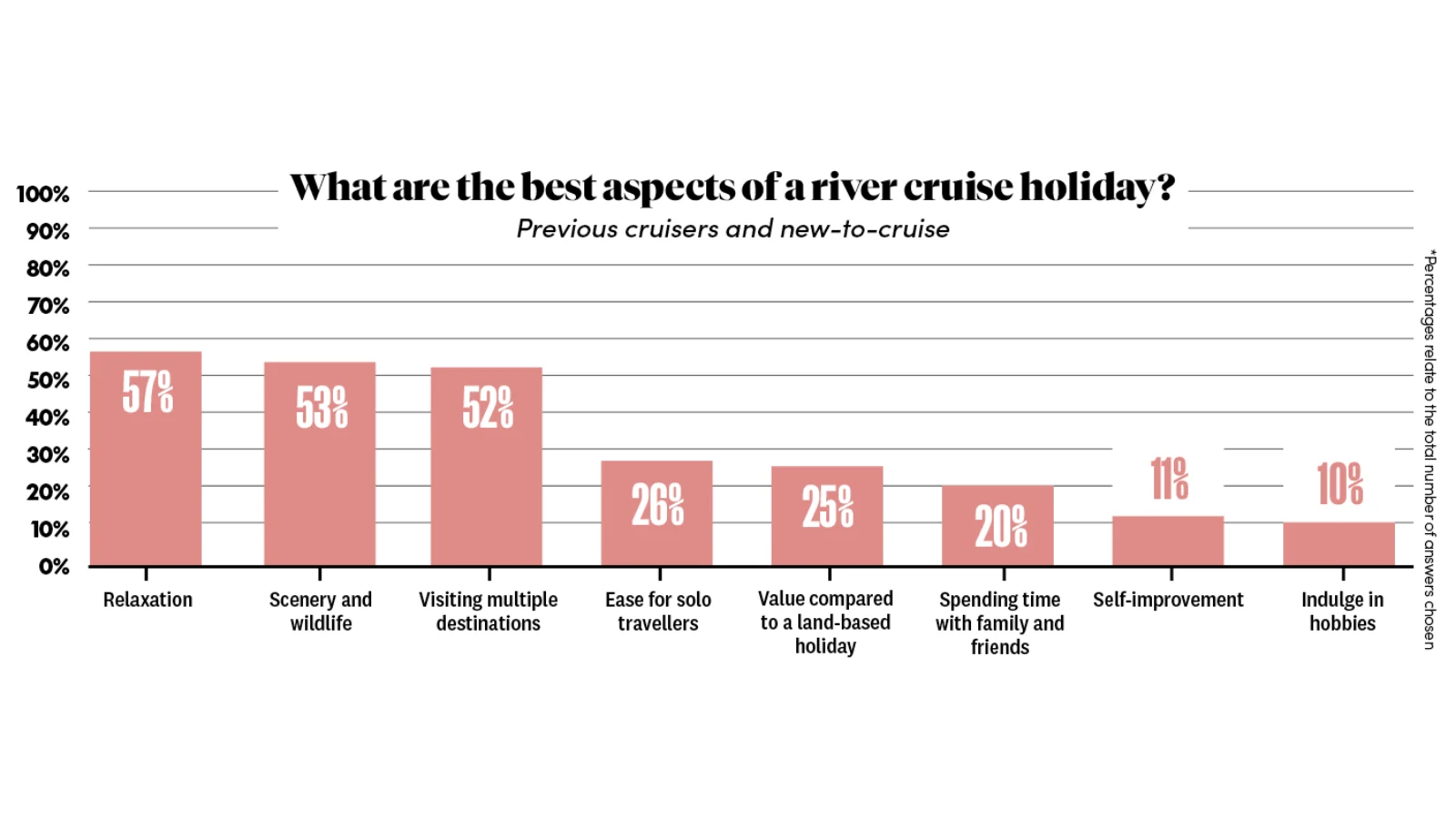
When looking at the reasons why a river cruise might appeal, most new to cruise (47 per cent) and seasoned cruisers (65 per cent) identified a waterway sailing as a great way to relax while travelling.
Scenery (53 per cent), visiting multiple destinations (52 per cent), appeal to solo travellers (26 per cent) and value compared to a land-based holiday (25 per cent) also polled highly with all respondents. As part of a recent research programme into consumer behaviour, Cruise118 asked psychotherapist and author Eloise Skinner why wellness travel is resonating with younger travellers.
“Extended periods without meaningful rest push the nervous system into chronic stress mode,” Skinner explains. “This is linked to burnout, poor sleep, lowered immunity and reduced emotional resilience. A change of scenery, particularly somewhere brighter or more active, can help reset sleep patterns, increase exposure to natural light and provide relief from post-Christmas fatigue and the winter blues.”
VIVA Cruises’ country manager UK & Ireland, Australia and New Zealand, Michelle Daniels says the line “actively markets” to younger guests. “Our average age is decreasing year on year,” she adds.
“We’ve made it our mission to give customers greater ease, flexibility and choice when it comes to creating their own river cruise experience. They choose where to dine, at what time and with whom so it’s less structured and with our VIVA All-Inclusive concept, guests can simply step onboard, relax and enjoy their holiday without the worry of hidden costs.”
The line purposefully doesn’t include excursions but instead offers a range of experiences to give guests a choice between expert-led activities or independent exploration. “Operating 12 months of the year provides excellent opportunities for off-peak travel with lower pricing and unique seasonal experiences,” Daniels adds.
Despite these positive sentiments towards the river sector, confusion around cost and misperceptions on price could become a barrier to the industry growing further.
According to our report, on average, new to cruise respondents say a £2,968pp seven-night European river cruise is too expensive to even consider purchasing. Interestingly, there was a large disparity between over 45s and under 45s to the question, with the former saying £2,744pp would price them out and the latter, £5,177pp.
Furthermore, only 9 per cent of the new-to-cruise market believe a river cruise break is good value for money compared to a land-based holiday. However, that jumps to 36 per cent for those who have river cruised before, indicating that once a customer has experienced an itinerary, they understand the holiday’s value.
Owner of Go River Cruise, James Hill, believes the industry’s biggest problem lies in demand not keeping up with capacity. “I feel there are now too many ships chasing too few clients, which is causing the product and marketing teams to look at new ways to increase awareness and desire for the sector to increase the booking levels,” he says.
“However, the product offer is widening so that there really is a river cruise for most people. While I have seen a reduction in the average age from the 70s to the 50s, I am very surprised to read that 84 per cent of 18–34-year-olds are attracted to a river cruise. Added value seems to be a growing trend, from walking holidays to collaborations like Uniworld and Seabourn.”
Wellness, sustainability, no-fly and cycling holidays are also tracking well with British consumers in 2026, Hill continues. “Demand remains strongest for European rivers, while more exotic destinations, such as the Mekong, India, the Amazon and Colombia, continue to represent a small part of the market.”
Ultimately, river cruise is not facing a demand problem, but a perception one. Younger audiences are open to the product, yet are pricing themselves out before they’ve grasped it. Once experienced, belief in value more than quadruples.
Clearer pricing narratives, sharper comparisons with land-based travel and more confident storytelling will be essential if the sector wants to reach new audiences that will steady the future of the industry.