

ULTIMATE DESTINATION GUIDE
s/v Rembrandt van Rijn
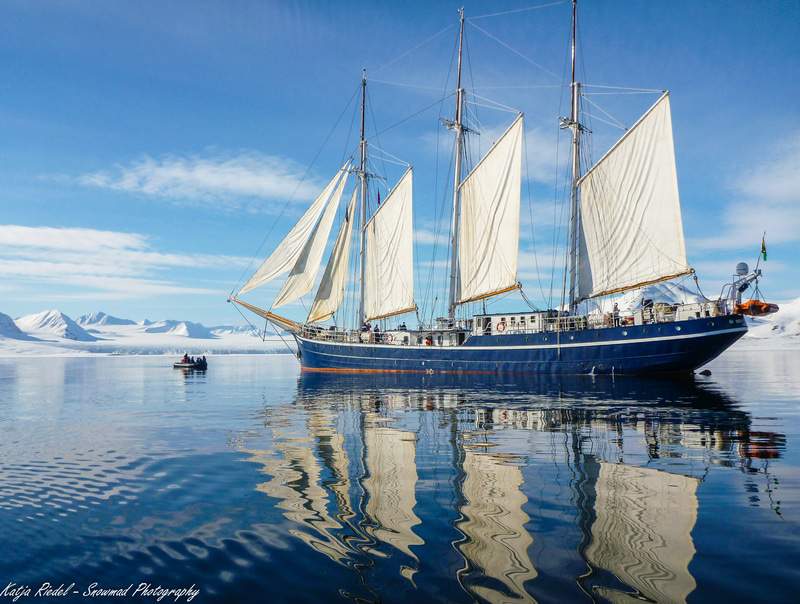
S/V Rembrandt Van Rijn was originally built as a herring lugger in 1947.
- Home
- /
- Ocean Cruise Destinations
- /
- Oceanwide Expeditions
- /
- s/v Rembrandt van Rijn
About s/v Rembrandt van Rijn
S/V Rembrandt Van Rijn was originally built as a herring lugger in 1947. The vessel was then rebuilt as a three-mast passenger sailing schooner in he Netherlands in 1994, sailing in Spitsbergen (1994 – 1996) and the Galápagos (1998 – 2001). The vessel later underwent a complete rebuilding and refurbishment program until 2011. The communication and navigation equipment has been completely renewed according to the latest SOLAS regulations.
The ship is well suited for expedition cruising among small islands and offer good open deck viewing areas, also when under sail. The two inflatable rubber crafts (Zodiacs) enable landing and wildlife viewing opportunities in otherwise inaccessible areas.

Ship Facts
| Launch year | Refit year | Language | Gross tonnage | Length | Width | Currency | Speed | Capacity | Crew count | Deck count | Cabin count | Electrical plugs |
|---|---|---|---|---|---|---|---|---|---|---|---|---|
| 1994 | 2011 | en | 435 | 49 meters | 6.65 meters | EUR | 7 knots | 33 | 12 | 1 | 16 |
types: EU 2 Pin 220v adapters provided: false |
Accommodation
The ship can accommodate a maximum of 33 passengers in 16 cabins. It has one Triple Private cabin (with shower and toilet and porthole), six Twin Private Inside cabins (with shower and toilet, no porthole), and nine Twin Private cabins (with shower and toilet and porthole).Triple Private Porthole

- 1 porthole
- 1 upper/lower berth + 1 lower berth
- Private shower and toilet
- Ample storage space
Facilities
- Shower
- Safe
- Hair Dryer
- Telephone
- Desk
- Pullman Bed x3
Twin Private Porthole

- 1 porthole
- 1 upper / lower berth
- Private shower and toilet
- Ample storage space
Facilities
- Shower
- Safe
- Hair Dryer
- Telephone
- Desk
- Pullman Bed x2
Twin Private Inside

- 1 upper / lower berth
- Private shower and toilet
- Ample storage space
Facilities
- Shower
- TV
- Safe
- Hair Dryer
- Telephone
- Desk
- Pullman Bed x2
Entertainment
Bar / Lounge


The Bar / Lounge is located on deck 2.
Dining
Restaurant / Lecture Room


Enrichment
Every day there will be excursions on land, weather and ice permitting. The landings will take three to six hours per day over untracked area. According to circumstances (the weather, the ice-situation or the passengers´ wishes) the program can sometimes be adjusted. Ample time will be devoted to wildlife, vegetation, geography and history.
Zodiac Cruising and Shore Programs


Our voyages are primarily defined as explorations and we spend as much time ashore as possible. We can be flexible, taking advantage of wildlife opportunities by using our zodiacs for both landings and cruises. Our knowledgeable guides assist on these outings, providing detailed information. This is supplemented by lectures on board which covers topics such as wildlife, nature and history.
Zodiac cruising instructions
The proper handling and usage of Zodiac landing craft, is crucial for exploratory voyages. These rubber boats are ideal for our operations. They have shallow drafts, and contain six air-filled compartments which give them impressive floatation and weight carrying abilities. The compartments are connected by valves, which allow the internal air pressure to be regulated, and they will still float even if one (or several) compartments become deflated. With these safe, durable and dependable boats we can land in many, normally inaccessible sites; Such as, beaches, shallow river banks, rocky outcrops, coral reef flats, ice floes, etc., as well as more conventional places; such as, docks, sea walls and jetties.
Passengers, however, must be aware of certain regulations involving the Zodiacs in order to assure adequate safety in our landing operations.
The Zodiac driver is in charge of the boat and its operations. Please follow his or her instructions at all times.
Always wear the provided zodiac safety vests when travelling in the Zodiacs. This is for your safety, and is required at all times while in the Zodiacs regardless of weather or sea conditions.
Always accept the helping hand of crew-members and Zodiac drivers when stepping into or out of the Zodiacs at the ship’s gangway or ashore. Keep both hands free for this operation, and use the preferred ‘sailor’s grip’; i.e., grip each other by the wrist, because this gives a much stronger grip than just holding hands.
Minimize the number of separate articles taken along with you when using the zodiacs. Backpacks are ideal for consolidating such diverse objects as cameras, binoculars, rain gear, extra shoes, etc. Carryon items may be handed to the boat handlers before embarking or disembarking. Keep both hands free.
Never smoke in the Zodiacs. This is hazardous because there are exposed fuel tanks connected to the outboard engines. Lit cigarettes are also hazardous to the rubber construction of the boats.
All landing conditions will be announced beforehand; i.e., ‘wet’ landings (these may require getting your feet wet by wading ashore), ‘dry’ landings (these make use of a dock or other object with which one can step ashore directly), and expected weather conditions.
Never disembark or embark the Zodiac over the wooden transom (stern) when the boat is backed onto a beach. Oncoming waves may suddenly push the boat higher onto the beach, knocking the careless passenger with the uplifted engine and propeller, or crushing an exposed foot with the very heavy transom. During ‘wet’ landings one may safely get in or out of the boat by first sitting on the rubber pontoon and then swinging one’s leg over the side. Always wait for instructions from the driver during landings.
One should always use a weatherproof bag (or bring along a small plastic bag) to protect non-waterproof items; such as, cameras and binoculars, from sea spray (or rain) when in the Zodiacs.
Hiking


Hiking the surreal terrain of the Arctic
There’s no closer way to explore a new area than on your own two feet. With this in mind, we offer a number of hiking expeditions built for all levels of hiker – from the casual walker to the hard-core hiking enthusiast.
Do you need to be an experienced hiker?
For basic walks, you just need to be in reasonably good shape and health. Hikes usually last somewhere between two and six hours. Keep in mind there are no paths and that you will be traveling over fairly rugged terrain and some small hills. We usually offer one to three different types of walks per landing site, ranging from a casual stroll to a challenging hike. The longest hike can last a full day, in which case we will provide you a packed lunch. All hikes are led and supervised by certified, experienced expedition guides.
How physically fit do you need to be?
Our hiking guides reserve the right to remove a passenger from the hiking group if they feel they are not in good enough health for a particular hike. This is for your safety as well as our guides.If this happens, our experienced guides will be able to recommend another hike based on your fitness level.
What kind of clothing should you take hiking?
Please bring clothing for the variable weather of the polar regions. Layers are your friend. You’re going to get hot as you hike, and layers will enable you to shed clothing without losing your overall protection against the elements.
With that in mind we suggest the following gear:
- Hiking or walking poles
- Backpack (25 liters)
- Knee-high rubber boots with a grip sole (we provide these on our larger motor vessels but not on our smaller sailing vessels)
- A waterproof bag (especially for cameras), since you are likely to get splashed during the Zodiac ride from the ship to the shore
- Straps for tying snowshoes onto your back or backpack
- Sturdy ankle-high hiking boots (you can use your rubber boots as well)
- Gaiters (knee-high waterproof protection) to keep your lower legs dry
- Sunglasses
- Sunblock
- Thin under-socks (to stop blistering) and thick over-socks (with spares)
- One-liter water-bottle
- Thermal under-gloves (fleece finger gloves) and warm outer-gloves or mittens (and spares)
- Turtleneck or neck gaiter
- Urine-collection bottle (for Antarctica), such as a wide-opening Nalgene bottle
- Thermal underwear
- Fleece jacket or vest
- Down jacket or spare fleece jacket
- Breathable waterproof jacket and trekking trousers
- Warm fleece hat
- Binoculars
Do not bring cotton clothing like T-shirts or jeans. When cotton gets wet (either from outside moisture or sweat), it will stay wet a long time – not a good thing in a cold environment.
Do the hiking activities cost more?No, they are covered in the cost of your cruise.Are the polar hikes in Arctic safe?Yes. All hikes are accompanied by one or more trained and experienced expedition guides. As in the Arctic (especially Svalbard), we must keep a constant lookout for polar bears, all hiking guides carry rifles due to this possibility while in polar bear territory. We only hike in areas that are outside glaciated terrain, since treks inside these areas bring people into contact with crevasses and are therefore considered mountaineering. Mountaineering trips are always accompanied by at least one UIAGM-certified mountain guide.
Ski Mountaineering
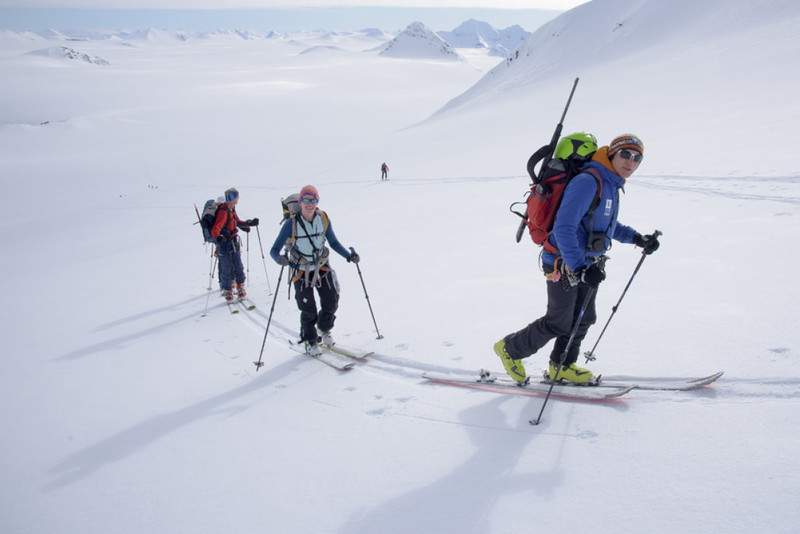
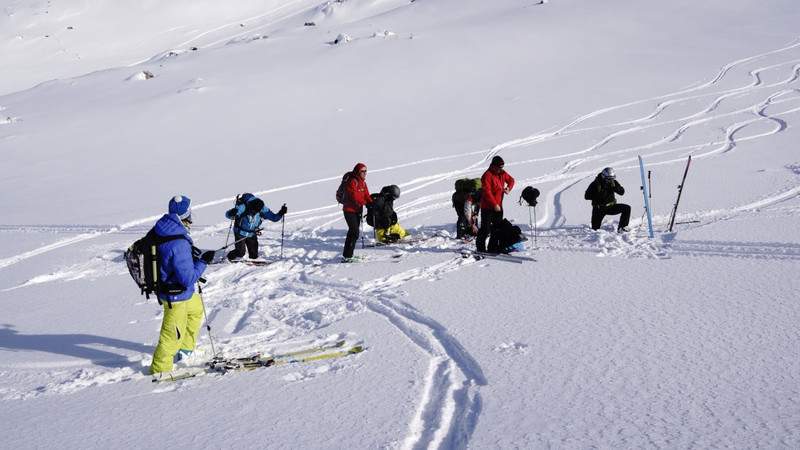
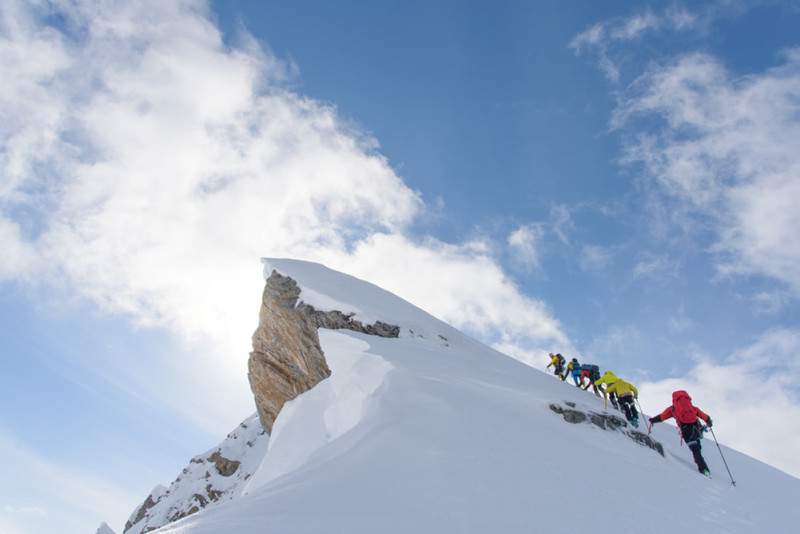


Dramatic ascents and breathtaking descents
Interested in something slightly more adventurous than shoreline walks and wildlife watching? Our ski mountaineering trips give you an invigorating up-close experience of the rugged peaks and majestic mountains flanking the high Arctic fjords.
Along the way, you’ll be able to enjoy all the usual perks of polar expedition cruising: expansive scenery, exploratory outings, and the chance to see all manner of exotic Arctic wildlife.
How our ski mountaineering trips work
Our ski mountaineering outings are always led by certified and experienced expedition leaders and mountain guides, such as Phil Wickens and Tim Blakemore, both of whom have been guiding in the Arctic for well over a decade.
Each morning the guides lead small groups of six to eight skiers onto the glaciers and into the mountains, typically ascending around 1,000 meters (3,300 feet) each day and often stopping for a packed lunch in the middle of the outing.
In order to participate, skiers must be in good physical condition, have prior ski mountaineering experience, and possess their own equipment. Guests will also be expected to demonstrate strong alpine skiing skills, both in ascents as well as descents, while on unprepared slopes of up to 35° in a variety of snow conditions.
To determine whether guests have the necessary skills for this activity, we ask all skiers to fill out a questionnaire highlighting their ski mountaineering experience beforehand. This is for the safety of our guests as well as our guides.
What you need to bring on a ski mountaineering trip
Ski mountaineering is a technically demanding and equipment-intensive sport, so you will need to bring more personal gear than on most Oceanwide voyages. The following is required:
- Skis with touring bindings
- Ski mountaineering boots
- Crampons adjusted to the size of your ski boots
- Skins
- Ski crampons (couteaux / harscheissen)
- Ski poles
- Avalanche transceiver
- Snow shovel
- Avalanche probe
- Four screw-gate karabiners
- Two tape slings
- Two prussic loops
- Climbing harness
- Ice axe
- Appropriate clothing (detailed in a checklist distributed prior to trip)
Snowshoeing


Snowshoeing in the Arctic
There really is no better way to take in a new place than by exploring it on foot. With that in mind Oceanwide Expeditions offers you the chance to explore your way inland from the Polar shorelines with a wide variety of snowshoeing expeditions built for everyone. From the casual explorer to the hard-core snowshoe-er.
Do I need to be experienced? How physically fit do I need to be?
For the basic walks you just need to be in reasonably good shape and health. The snowshoe activities last usually somewhere between 2 and 6 hours. Keep in mind that there are no paths and that you will be travelling over fairly rugged terrain and will be taking on some hills.
There are usually 1 to 3 different types of walks offered per landing ranging from a casual stroll to a challenging hike. The longest hike can last a full day (we send you off with a packed lunch).We do reserve the right to suggest that a passenger try another activity if it seems like they will not be able to enjoy a particular hike. This is done partly for the enjoyment of the other passengers and partly for safety concerns – if there is a health incident there is no help beyond basic first aid in the vicinity.
Our experienced guides will be able to recommend a particular hike to you based on your fitness level. If you have any questions at all about your health or skills please don’t hesitate to get in touch with us, we’d be more than happy to help you sort out your concerns.
Do I need to bring snowshoes?
Not at all. We’ll provide you with MSR lightweight snowshoes that easily attach to rubber boots or sturdy hiking boots. We do not provide the rubber boots on Rembrandt van Rijn.
However, you do want to bring clothing that is suitable for the changeable weather of the Polar Regions. Layers are your friend – you’re going to get hot as you work your way around the tundra and you’ll want to be able to shed a layer or two without losing a big percentage of your elemental protection. With that in mind we suggest:
- Hiking/walking poles.
- Rubber boots that are high enough to get you from the Zodiac to the shore and have a good gripping sole for the shore landings and walks.
- A waterproof bag (especially for cameras) – you’re likely to get splashed during the Zodiac ride from the ship to the shore.
- Straps for tying snowshoes onto your back or backpack.
- Ankle-high sturdy hiking boots for the actual treks and for wearing snowshoes.
- Sunblock.
- You might want gaiters (knee-high waterproof protection) to keep your lower legs dry while hiking.
- Sunglasses.
- A backpack (25 litres is a good size).
- Thin under-socks (to stop blistering) and thick over-socks. (Bring some dry spares as well.)
- A 1-litre water-bottle.
- Thermal under-gloves (fleece finger gloves) and warm outer-gloves or mittens (you might want a spare set of these as well).
- A turtle-neck or neck gaiter.
- A urine-collection bottle (regulations forbid leaving human waste behind in the Antarctic). Try looking for something like a wide-opening Nalgene bottle (they sell specialised versions for ladies at outdoor shops).
- Thermal underwear.
- A fleece jacket or vest.
- A down jacket or spare fleece jacket.
- A breathable (e.g. Gore-Tex) jacket and trousers.
- Trekking trousers.
- A warm fleece hat.
- You might also want to bring along binoculars, and a Thermos bottle.
Don’t bring regular cotton clothing like t-shirts or jeans if you can avoid it because if it gets wet (either from outside moisture or sweat) it will stay wet – not a good thing in a cold environment.
Deckplans
Deck 1

- Captain
- Bridge
Deck 2

- Crew messroom
- Galley
- Main entrance
- Bar / lounge
- Cold buffet
- Hot buffet
- Restaurant / Lecture room
Deck 3

- Triple Private Porthole (Green)
- Triple Private Inside (Purple)
- Twin Private Porthole (Brown)
- Cabin Bathrooms (B)