
Cruise review: Viking Venus’s gourmet journey to Hong Kong
On a culinary-themed voyage from Bangkok to Hong Kong aboard Viking Venus, Chris Caldicott discovers an exciting combination of sizzling street food and cool spiritual calm
Among the historical figures and cuisines that infuse Southeast Asia’s cultural broth, there are two constants: Buddhas and chillies. Both are imports – Buddhism from India over two millennia ago, and chillies from the Americas, which arrived 500 years ago on the ships of spice merchants.
It’s a fact that becomes evident almost immediately during my cruise between Bangkok and Hong Kong with Viking, which kicks off with a comfortable pre-cruise stay at the elegant Shangri-La hotel on the Thai capital’s riverfront.
Having taken five to acclimatise to the new time zone and climate, my itinerary kicks off with a visit to Wat Pho to see Thailand’s largest collection of antique Buddha images, reachable from my hotel via a pleasant 35-minute boat ride along Bangkok’s Chao Phraya river.
After marvelling at the giant shimmering Buddha stretching out in 150 foot of relaxed golden splendour, one of many wonderful discoveries strewn across the eight-hectare sight, it’s time for the continent’s other beloved import.
The chillis arrive like a tsunami back in the Shangri-La restaurant, where my taste buds are ignited by dishes of deep-fried tofu in a spicy sauce, a hot and sour seafood soup with lemongrass and fresh herbs and wok-fried kale with shiitake mushrooms.
I throughly enjoy every mouthful. For a palate-cooling nightcap I head to the picturesque Bamboo Bar at the Mandarin Oriental to try its new signature ‘White Lotus’ cocktail, created to mark the venue’s role in the latest series of the hit HBO television series. I give it a swirl, letting the liquid coat the large square ice cube filling the circular glass. It’s citrusy and refreshing, and sweetened with a fruit I had never tasted before called salak.
Excursions to cooking schools are a highlight of many cruise itineraries in this part of the world, so I’m excited to arrive at Don Bosco in the port of Sihanoukville for a crash course in Cambodian cuisine.
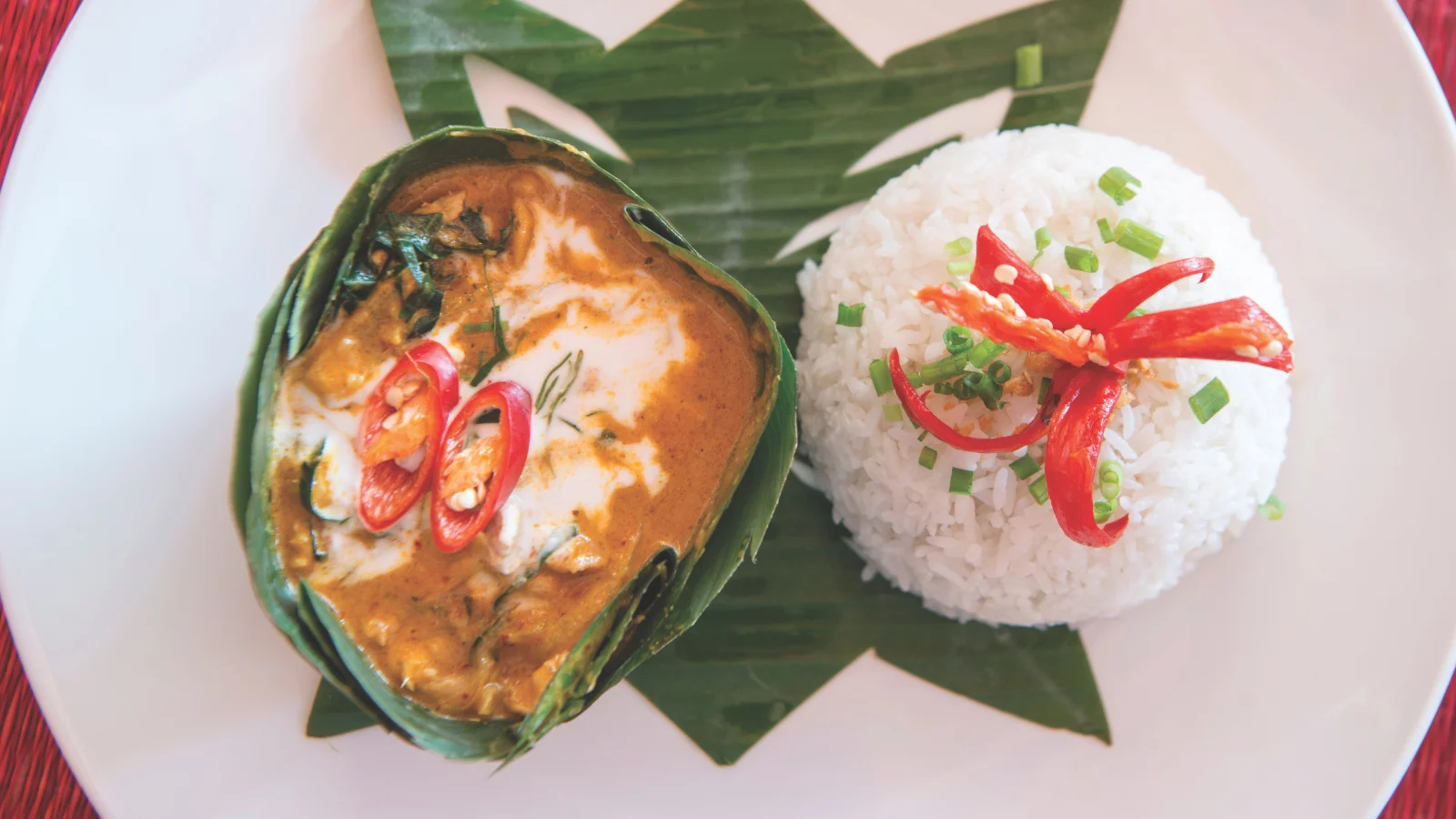
After an introduction to the ingredients on display in the local market, the class begins with a classic Khmer spice paste called kroeung. Under strict instructions from Chef Dara, we pound the exact quantities of galangal, garlic, lemongrass, lime leaves, chillis and turmeric to flavour a coconut milk broth, which we serve with a steamed white fish in homemade banana leaf bowls.
It’s a dish called Amok and it dates all the way back to the 9th century where it was a royal favourite. While the fish steams away we make crispy golden Banh Xeo rice flour pancakes stuffed with mushrooms and a spicy Toek Trey Chou sweet and sour sauce to dip them in. After lunch, our city guide Thi Kim shares stories of how she survived the traumas of the Khmer Rouge era genocide as told in the film Killing Fields.
“It was the darkest of times,” she tells us, “but the future for my grandchildren is now bright.” She takes us to Wat Krom, a hilltop Buddhist monastery resurrected after the iconoclastic vandalism of the Khmer Rouge. Today, it’s a thriving community of orange-robed monks in a serene setting among tall trees and jungle foliage.
There are lingering legacies of the French colonial era throughout Ho Chi Minh, such as the elegant opera house, grand post office and whiffs of freshly baked baguettes that waft from the banh mi stalls. Having sailed out of Sihanoukville with a deep understanding of Cambodian cuisine, it’s only right that we pay the same respect to Vietnamese gastronomy with a second cooking class.
This one begins in the city’s old Saigon-era Ben Thanh Market with our guide Fun who struggles to keep our concentration on ingredient shopping rather than the temptations of other stalls.
At the Hoa Tuc school we are assigned personal cooking stations. Chef Mai’s infectious sense of humour makes learning the art of creating contemporary versions of traditional Vietnamese dishes a lot of fun. Eating the resulting Cha Gio Sai Gon spicy spring rolls, a tom thit chilli and fresh herb infused prawn and papaya salad and a Pho Bo beef noodle soup for lunch was an indulgent reward for our efforts.
Pop-up food events in the World Cafe are complemented by outdoor stalls on deck serving authentic Asian street food like Pho Noodle Soup
The Lin Ung Pagoda at our next stop, Da Nang, boasts a modern statue of a giant female Buddha, which we admire while enjoying spicy seaside snacks in a cool lounge bar on My Khe Beach, once a favourite surfing spot for GIs. Inevitably, it evokes memories of scenes from the film Apocalypse Now. The culinary discoveries continue back onboard, courtesy of Viking’s five-course ‘La Route Des Indes’ menu and Indonesian dishes served in The Chef’s Table.
Meanwhile, pop-up food events in the World Cafe are complemented by outdoor stalls on deck serving authentic Asian street food like Pho Noodle Soup. On my last sea day, I book a deep tissue massage and haircut in the Liv Nordic Spa before taking an Italian cooking class at the ship’s Kitchen Table Cooking School, a chance to get reacquainted with western flavours.
Viking Venus’s maiden visit of Hong Kong is celebrated by a pilot tug with its firehose salute guiding us to our dock on Kowloon’s Ocean Terminal. After a nostalgic city tour of the city that was once home, I take a ferry to Cheung Chau Island, past the giant Ngong Ping Buddha statue on Lantau, for a bowl of chilli prawn fried rice by the beach, ensuring the Buddha and chilli theme continues right to the end of my voyage.