Can cruise score big from the sports tourism surge?

Sports tourism is one of the fastest growing and most lucrative travel markets. What must the cruise sector do to capitalise on this burgeoning trend and prevent it being a swing and a miss? Will Payne investigates
You’ll win no prizes for guessing what the UK’s most watched television broadcast of all time is. The 1966 FIFA World Cup Final drew the gaze of 32.3 million Brits, which, at the time, represented nearly 60 per cent of the population.
The match even surpassed the likes of Princess Diana’s funeral and the Apollo 13 splashdown by millions of viewers. But it’s not the only sporting event in the top 12. The FIFA Euro 2020 Final clocked in at 29.8 million viewers, the 1970 FA Cup final replay at 28.5 million and the 2012 Summer Olympics closing ceremony at 23.2 million.
Sports are a vital part of the domestic economy and, in the modern era, diehard fans are willing to travel to the ends of the earth to see their team play. According to UN Tourism, sports holidays generate around 10 per cent of the world’s total expenditure on travel.
It has an estimated growth rate of 17.5 per cent between 2023-2030, making it one of the fastest expanding sectors in travel and tourism. The association says “mega” sports events, like the Olympics and FIFA World Cup, “can be a catalyst for tourism development if successfully leveraged in terms of destination branding, infrastructure development and other economic and social benefits”.
Qatar Tourism reported a 157 per cent surge in year-on-year visitor numbers in 2023, which it says was heavily influenced by the 2022 FIFA World Cup in Qatar. The chair of Qatar Tourism, Akbar Al Baker, says the growth in the number of international visitors to Qatar bared “the fruit of the country’s strategy to leverage the momentum of the world’s biggest sporting event”.
How can the cruise industry capitalise on this growing market? The sector is well known for its ability to create unique, once-in-a-lifetime experiences, which sets it apart from traditional land-based breaks. While not every sporting event can be accessed via a cruise, add-ons such as meetings with legendary athletes, access to exclusive areas and onboard activations make cruising even more attractive to fanatics.
This opportunity has been pounced on in recent years by some of the world’s biggest operators. MSC Cruises, for example, deployed MSC World Europa and MSC Poesia as floating hotels in Doha to help with the shortage of accommodation during the 2022 World Cup. Since then, the line has bolstered its partnerships with leading sports brands to further capitalise on this growing market.

Vice president of international sales Antonio Paradiso says the company’s collaborations with the likes of Chelsea FC and Formula 1 play a key role in raising the operator’s visibility and connecting it with audiences it hasn’t engaged with before.
“By aligning with globally recognised sports brands, we can showcase our presence across multiple markets and reach passionate fans worldwide, while also supporting local communities,” he adds.
“We’re also seeing strong enthusiasm for sport-themed cruises, such as our Rugby Champions Cruise back in the summer from the UK, where guests connected directly with England’s 2003 Rugby World Cup legends. Bringing these sporting heroes onboard proved a real draw for fans and reinforced MSC Cruises’ commitment to celebrating sports and connecting with communities worldwide.”
For Celestyal, sports tourism is proving a big draw for new customers and returning cruisers alike. “With the addition of F1-themed cruises, Celestyal is tapping into a new and emerging sports tourism demographic,” chief commercial officer Lee Haslett says.
Last year, for example, the brand hosted an onboard speaker event with 13 times Grand Prix winner David Coulthard. “Sport and travel are two of the UK’s favourite things – add in cruising and it’s a win-win-win,” says Haslett. “Celestyal’s next Arabian Gulf programme revs up with the Abu Dhabi Grand Prix race in early December 2025, and packages offer an accessible and affordable way to take in a major F1 event with accommodation, transfers, a cruise and grid access all bundled together.”
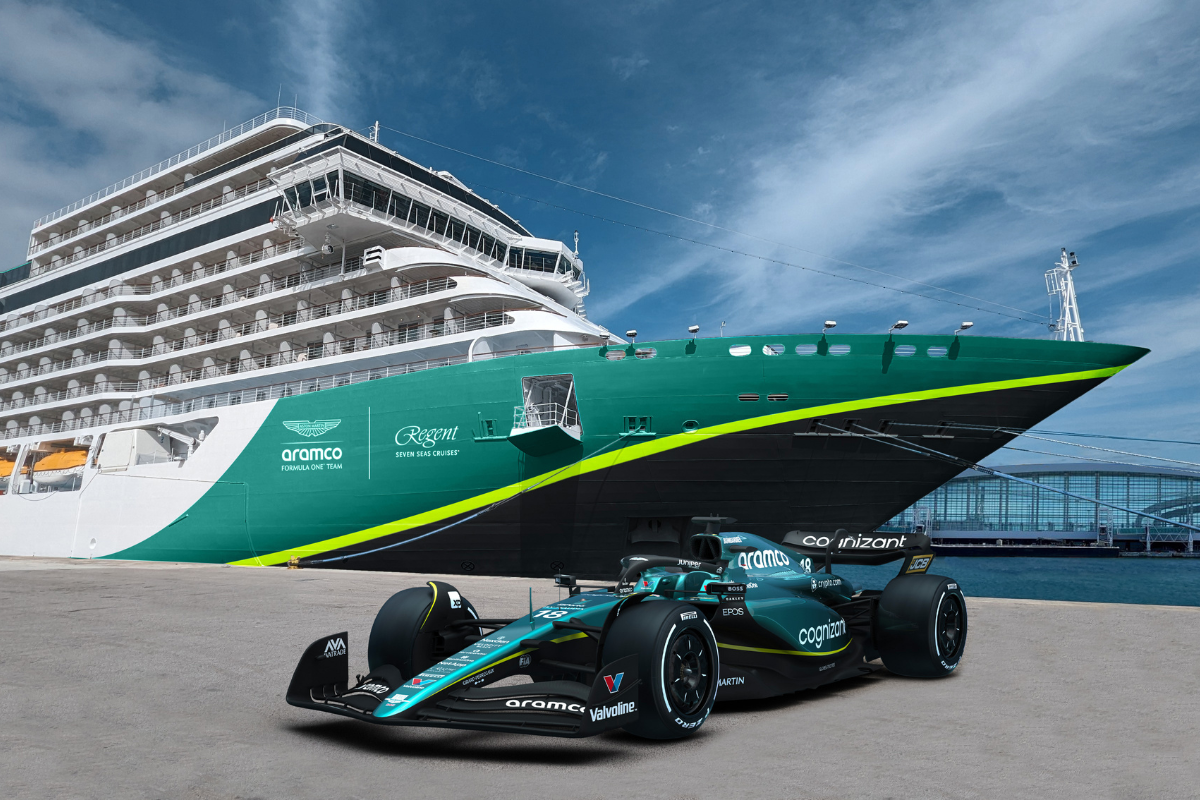
Collaborations with sports teams have been identified by operators at the upper end of the market, too. Earlier this year, Regent Seven Seas Cruises partnered with the Aston Martin Aramco Formula One Team. The partnership saw a range of trade activations, including a Silverstone race day experience, as well as the launch of new shoreside programmes, such as VIP driving experiences and tours of the team’s AMR Technology Campus.
The line also introduced a new 10-night European cruise preceded by an Aston Martin event in the home of the Italian Grand Prix, Imola, and a Spotlight itinerary from Barcelona with Pedro de la Rosa, Aston Martin team ambassador and former F1 driver. In June, the line sailed a 14-night itinerary with golfing legend Annika Sörenstam, taking guests to some of the world’s most iconic courses.
Vice president of UK and Ireland sales Paul Beale says the line’s partnerships with world-renowned sports brands are “critical” for engaging new-to-brand guests. “There’s a clear and growing segment of travellers who view luxury travel as a gateway to global sporting and cultural moments,” he continues. “We are always looking for events of interest that pair with our scheduled itineraries – this combination presents real opportunity for agents as well.”
But have these partnerships translated into trade business? For InteleTravel, sports tourism has seen a 70 per cent uptick in bookings compared to the same period in 2024. UK and Ireland managing director Tricia Handley-Hughes puts this increase down to several factors. “F1 continues to attract visitors, generating interest in destinations hosting these races. Dubai, Abu Dhabi and Las Vegas are prime examples,” she says.
Handley-Hughes predicts a further spike in sports-related bookings following the Autumn budget at the end of November, when consumers will have a better idea of household expenditure. “We may see an increase in FIFA World Cup enquiries, but right now customers remain cautious with large purchases and non-priority spend,” she continues. “However, should England perform well, we may see a totally different picture and a surge of enquiries.”
Despite not taking place until 2028, Handley‑Hughes urges agents to remain aware of the next Summer Olympic Games. “History tells us that during the period of Olympics, hotel prices are inflated in the lead-up and then when accommodation is left unsold, availability emerges and late sales initiated. So, customers may delay their decision-making to nearer the Games period,” she advises.
For Travel Counsellors, bookings linked to major sporting events are up by 47 per cent compared to last year. Commercial director Alex Gavalda puts this increase down to events like the British and Irish Lions’ rugby tour in Australia, as well as the FIFA World Cup and the Olympics. “We expect interest in sport-inspired travel to keep building across further host cities,” he says.
“We’re seeing more customers plan their holidays around these sporting moments, often combining them with cruise itineraries or longer touring adventures. Cruise lines are responding in kind, offering itineraries that coincide with key events and adding ever-more sporting and wellness experiences at sea, from golf simulators and pickleball courts to climbing walls, surf simulators and full wellness programmes.
“For many guests, it’s about combining their passions with the joy of travel in one seamless journey, and we’re pleased to support this with a global community of both cruise and luxury travel experts who can craft bespoke itineraries and experiences, combining sporting events on land and at sea.” Iglu, meanwhile, has developed a new range of tailor-made itineraries to events like the USA’s National Football League (NFL), tennis and cricket matches.
Head of tour operations Paul Frost says: “We are seeing definite interest in mixing land tours with cruises, and in a specific sports event as a catalyst for a trip. We’re adding more and more of these all the time. We expect 2026 to show steady growth in this type of trip.” The story remains the same in Scotland. Jacqueline Dobson, president of Barrhead Travel Group, reports a growing interest in sports tourism over the past few years.
“Live events – such as sports events and concerts – are becoming a big part of the decision process when people are choosing dates or destinations,” she adds. “Particularly with sports where teams have a big fan-bases, such as football, there seems to be increasing demand for people following their teams to important or iconic matches.”
I think we’re gradually going to see more shore excursions that include sporting experiences as well as an increase in demand for cruise and stays that take in live events
For cruise, Barrhead has seen a marked shift towards sporting experiences both on and off ship over the last few years. “Onboard, we’ve already seen cruise lines adopt the global trend of pickleball and padel, for example, and I think we’re gradually going to see more shore excursions that include sporting experiences as well as an increase in demand for cruise and stays that take in live events,” Dobson continues.
The sentiment was shared with Canadian sports experience provider Roadtrips, which has noted a fast-growing opportunity for cruise lines and agents to extend excursion programmes and combine sporting packages. “Where events are held in port cities, cruising can offer a smart alternative, providing access and the chance to combine a luxury voyage with attendance at marquee events,” says president and founder Dave Guenther. “It will be interesting to observe the cruise industry evolving over the next few years to adapt their shore programmes to include more sporting events.”
As demand for sports tourism continues to grow, the cruise industry’s next big opportunity lies in the packed calendar of events in the next few years. Lines like MSC Cruises, Regent Seven Seas Cruises and Celestyal have cemented the sector’s position in the market, with swathes of shoreside and shipside activations offering something different to the land-based alternative.
These unique factors – meetings with sporting legends, the allure of a dedicated resort-at-sea in between fixtures and the ease of travel between matches – are key attractors that hotels simply cannot match.
As fans increasingly plan their travels around the world’s biggest fixtures, cruise lines are uniquely placed to turn those passions into premium, experiential holidays at sea. With the 2025 FIFA World Cup, 2026 Italian Winter Olympics and 2028 Summer Olympics in the US, the potential for collaboration between cruise lines and events is poised to hit new heights.
For agents, these partnerships not only open the door to new customers, but also the opportunity to get closer to the action with trade incentives and competitions. The question now isn’t whether cruise can capitalise on this booming trend, it’s how fast it can stay ahead of the curve. And if there’s one thing history shows, it’s that when the whistle blows, the home nations will be watching – and now, perhaps, sailing too.